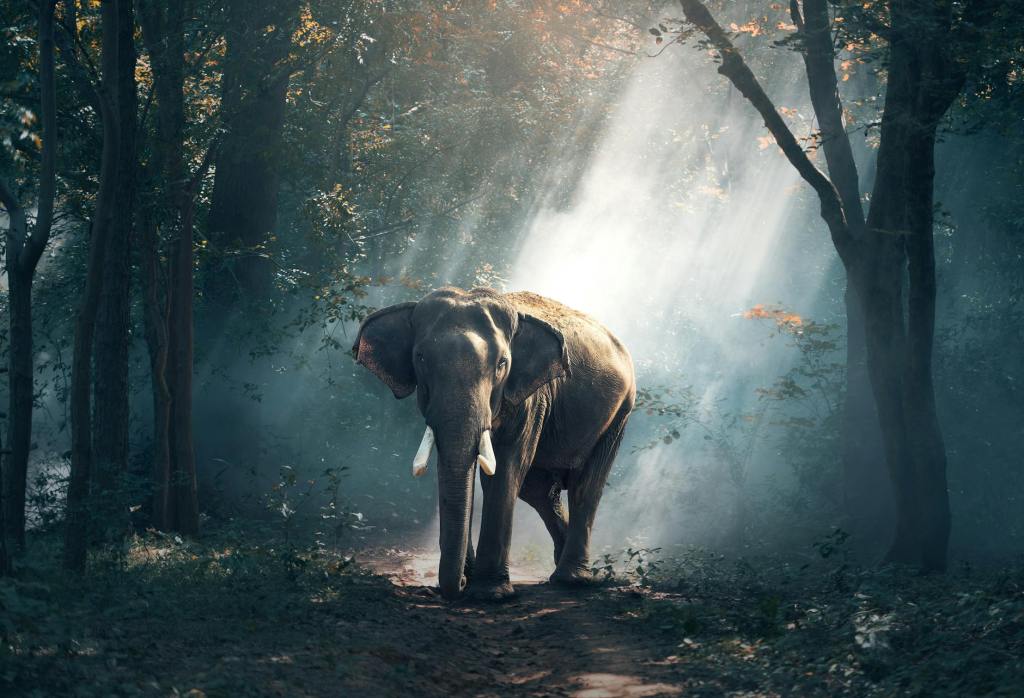
When I entered the field of Digital Transformation in my early consulting years I got confused. I followed several discussions of seasoned managers. To some of them technology was in the centre of Digital Transformation, to others is was the business models, others supported “Digital Leadership” and a few people said it is the humans. A few courages ones said its all about “purpose”. Well, I claim Digital Transformation is an elephant.
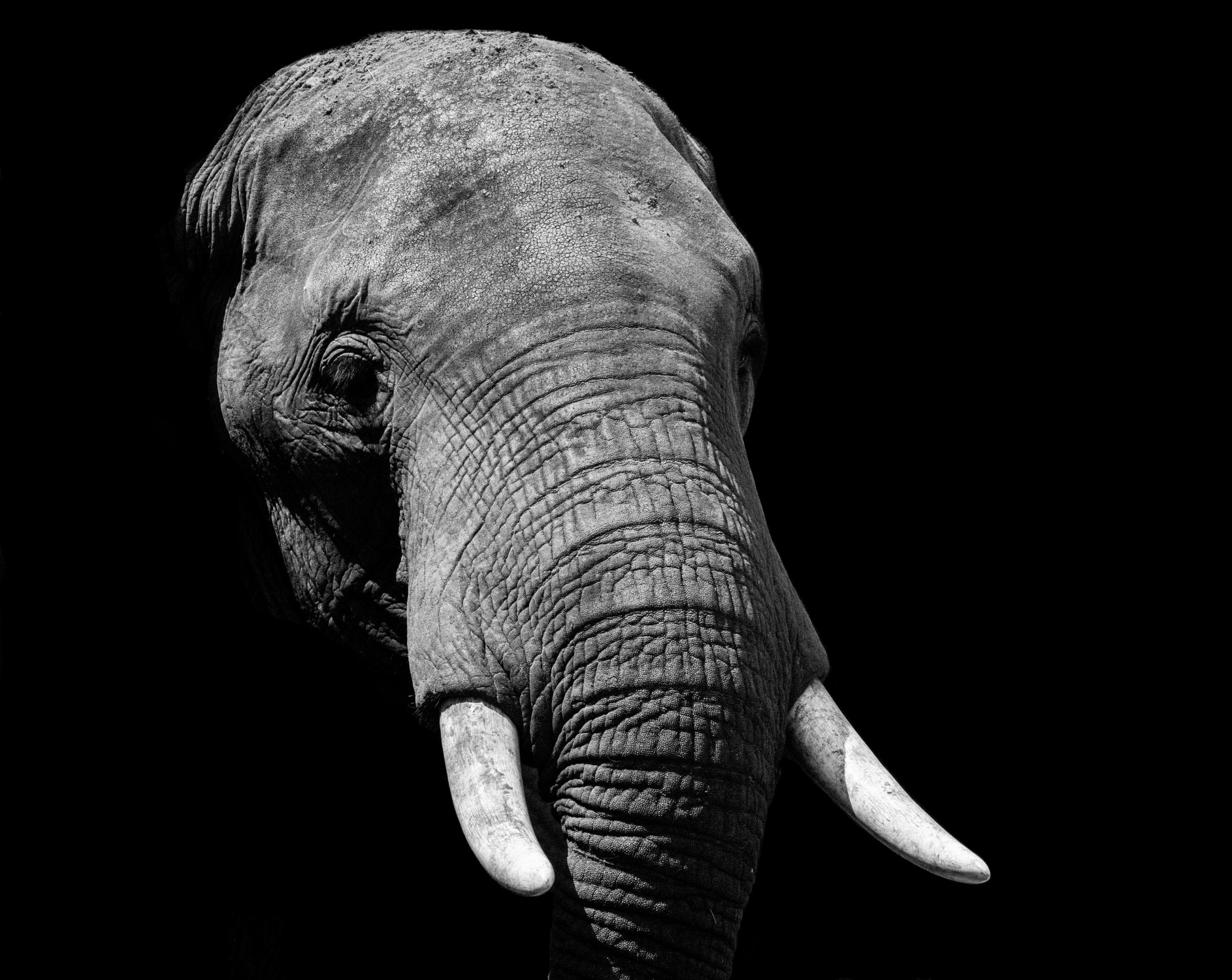
The elephant is in the middle of the room. We know it, but we cannot see it. The room is pitch black. Let’s have three people dare to explore the dark and get to feel this peaceful animal. The first person starts at the legs of the animal. She says: “Oh, I understand what it is. An elephant it is made of four strong, tall columns. They don’t overlap – but support each other. Each leg is strong like a tree!”
The second will explore from the trunk of the animal. He says: “No, it’s not like a tree – it’s is very soft, very agile and flexible! And it’s only one part – not four! It even can inhale and exhale, it can carry water and lift objects. It is very strong but very, very soft! An elephant is a water hose.”
The third will touch the tail of the animal. This person says: “It is very thin, long and at the end of it is hair. You both are wrong! I know an elephant is like a broom.”
It would be so easy if we could just “switch the light on” an understand immediately the unknown. Of course, it is not possible. The only way to understand is to explore, and when we explore together building on the experiences of others our picture of the unknown becomes more detailed.
We can say: “Yes, this being has four strong columns, something like a water hose and a broom – and what else? Let’s understand better what we have at the tips of our hands, and test and explore if there is more to it.”
This metaphor of the elephant also explains why I explored Systems Theory. Studying industrial engineering provided me a broader perspective and an understanding that there is more than one truth. I then specialized in quality management and lean management. Yet, I always felt there is more than “columns, trunks and brooms”. To understand what is happening on a meta-level, it takes models that work as a super-theory. Here Systems Theory proved many times to provide valid models to describe what I experienced in my environment. Further exploring systems theory helped to even deepen my understanding on what transformation takes on the individual, processes, social systems and technology.
So, what is my conclusion? I would suggest there is no “Digital Transformation”, but a digital enhenced transformation on how organizations: a.) take their decisons, b.) communicate, c.) operate – inside and outside – to deliver their costumers value.
 OnTransformation.lu